Leaning & Bulging Wall Correction in Bethlehem, PA: Cost & Process
Leaning is the wall telling you the load has beaten it. Correction resets the geometry and removes the pressure that caused it, in that order.
Get a Free Quote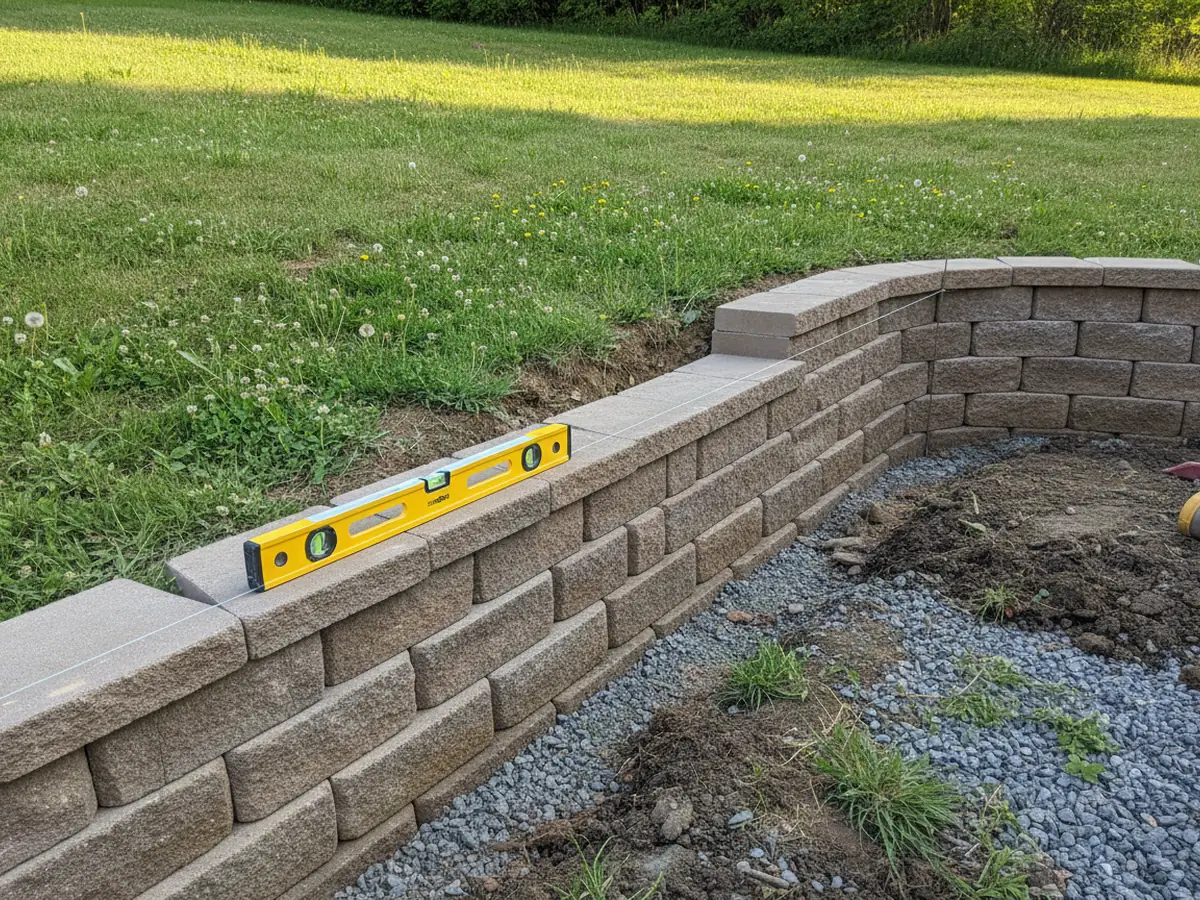
Leaning is the wall telling you the load has beaten it. Correction resets the geometry and removes the pressure that caused it, in that order.
Get a Free QuoteA wall that leans is not a cosmetic problem waiting to be straightened. It is a structure that has already lost the argument with the soil behind it, and the lean will keep growing as long as the load that caused it is still there. Correction that only addresses the geometry is a repair with an expiry date.
The distinction that matters is where the movement happened. A wall bulging in the middle while its base stays put has usually lost lateral support — no geogrid, or backfill that was never compacted. A wall tilting as one rigid piece has moved at its footing, which is a foundation problem rather than a facing problem, and needs the base rebuilt rather than the face reset.
Measurement beats impression here. A string line and a level over a few weeks show whether the wall is still moving or has found a resting angle, and that difference changes what the repair should be. A wall that has stopped moving and sits within tolerance is sometimes best monitored rather than rebuilt — advice that costs nothing and is worth asking for.
Anything sitting on top of the wall moves with it. Straightening the wall does not straighten the fence above it — once the wall is stable, posts that have gone out of plumb and gates that no longer latch are a separate job, and the kind of fence and gate repair a general handyman handles rather than retaining wall work. We will tell you which part of the job is ours and which is not.
Plumb offset and base rotation are recorded as numbers so the repair is sized to real movement and you can see whether it is still progressing.
Bulge in the middle points to lost lateral support. Rotation at the base points to the footing. The two need different work and the difference is stated plainly.
Courses are dismantled to below the failure point and no further. Sound sections and salvageable block stay, which keeps the cost down.
Geogrid tied back into the slope at the depths the height calls for, over a base that has been re-levelled and compacted.
The drain outlet is located or installed and shown to run, because a corrected wall with the original drainage is a wall queued up to lean again.
As a rough guide, movement beyond about an inch per foot of height, or any visible rotation at the base, means repair rather than monitoring. Measurement over a few weeks tells you whether it is still moving.
Not by force alone. The soil behind has settled into the new shape, so the courses have to be taken down to below the failure and re-laid with the reinforcement and drainage that were missing.
Sometimes, and you will be told so. A wall that has found a resting angle, sits within tolerance and drains properly can be monitored instead of rebuilt.
We focus on Bethlehem and the immediate area — which means realistic scheduling, local pricing, and follow-through. Every job starts with a clear scope and a written price.
A leaning or bulging wall is holding back tons of saturated soil and losing.
The drain behind the wall is the part nobody sees and the part that decides whether the wall lasts.
When a wall is past repair, rebuilding it right is cheaper than repairing it twice.
All retaining wall repair services in Bethlehem, PA · About this service