Stone & Block Wall Repair in Bethlehem, PA: Cost & Process
Dropped caps, blown-out faces and washed-out joints on stone and segmental block — repaired to match, without rebuilding what is still sound.
Get a Free Quote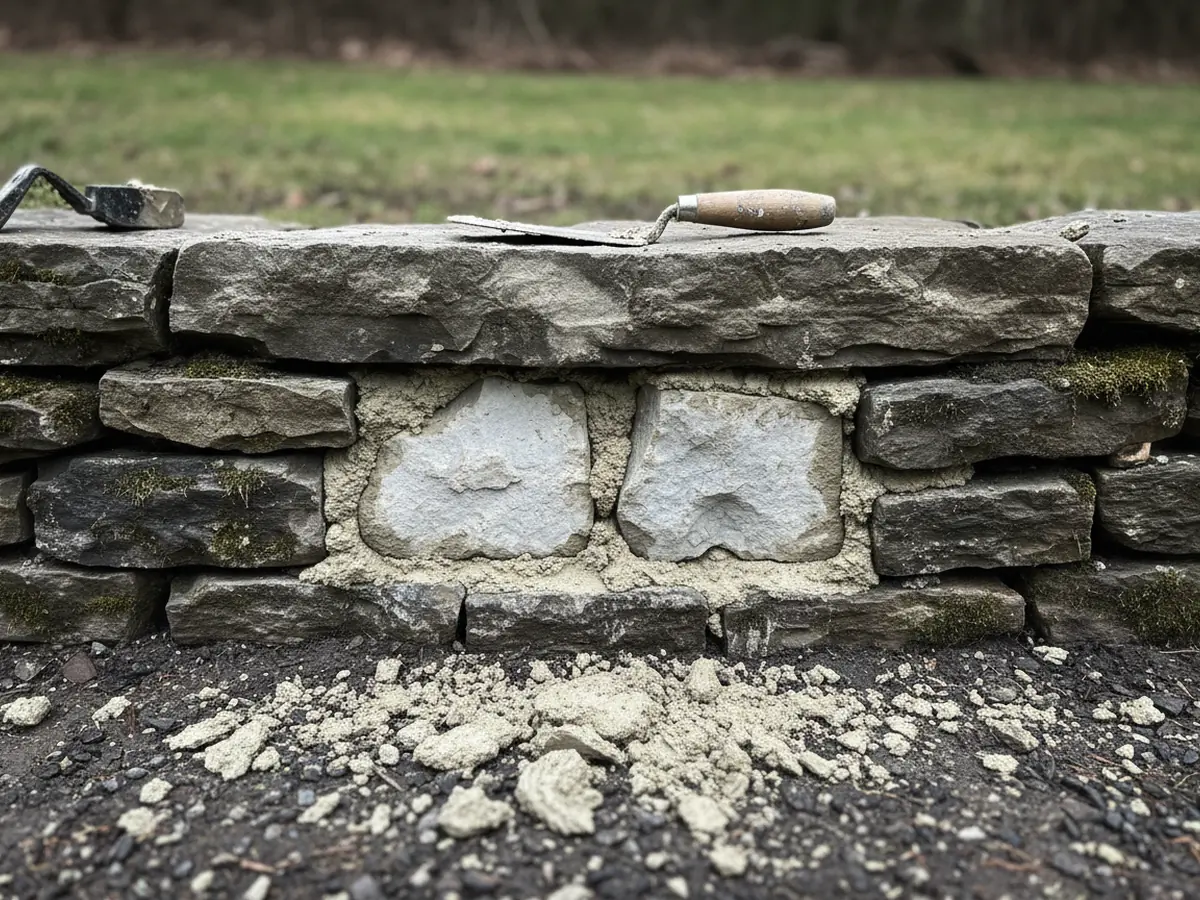
Dropped caps, blown-out faces and washed-out joints on stone and segmental block — repaired to match, without rebuilding what is still sound.
Get a Free QuoteNot every wall problem is structural. Caps work loose because the adhesive under them has aged out of its service life, individual units spall after enough freeze-thaw cycles, and mortar joints on stone walls erode with water and time. These are surface repairs on a wall that is otherwise doing its job, and they should be priced as such rather than turned into a rebuild.
Matching is the hard part. Segmental block is manufactured in colour blends that change over the years and get discontinued, and quarried stone varies between beds. Sourcing the nearest available match, or relocating existing units from a hidden run to the visible face and putting new units where nobody looks, is usually the difference between an invisible repair and an obvious patch.
Surface repairs are also worth taking seriously as early warnings. A cap that keeps lifting at one spot, or joints eroding in one section while the rest holds, often means water is concentrating there — a downspout discharging above the wall, or a low point channelling runoff. Fixing the unit without asking why it failed means doing it again.
The wall line and base are checked first. Surface repair on a wall that is actually moving is the wrong job, and you will be told which one you have.
Nearest available block colour or stone bed identified, with relocation from hidden runs used where a manufactured match no longer exists.
Failed units and old adhesive or mortar are cleaned back to sound material so the repair bonds to something solid.
Units re-laid to the existing course line and batter, caps set on fresh adhesive, joints repointed to match the surrounding profile.
If one area is failing faster, the runoff concentrating there gets identified — usually a downspout or a low spot — so the repair is not on a repeat schedule.
Usually the adhesive has aged out, but repeat failures in one spot normally mean water is concentrating there. Worth finding the downspout or low point before resetting them again.
Often closely, by sourcing the nearest current blend and relocating your existing units to the visible face, putting the new ones where they are not seen. You see the match before it is committed.
Not usually on its own — units spall from freeze-thaw while the wall stays sound. It becomes structural when cracking follows a line across several courses, which is checked as part of the visit.
We focus on Bethlehem and the immediate area — which means realistic scheduling, local pricing, and follow-through. Every job starts with a clear scope and a written price.
A leaning or bulging wall is holding back tons of saturated soil and losing.
Leaning is the wall telling you the load has beaten it.
The drain behind the wall is the part nobody sees and the part that decides whether the wall lasts.
All retaining wall repair services in Bethlehem, PA · About this service